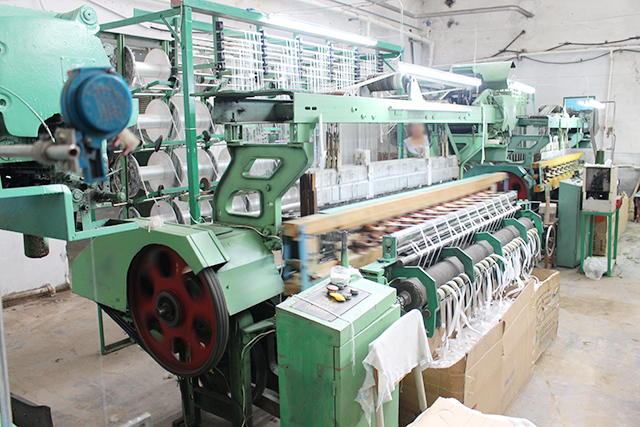
Surface fuzzing. The case and bag webbing surface fuzzing and needle edge defects often occur in the production process. What are the reasons and how to solve or prevent them? The following manufacturer's knitting will tell you. Causes of surface fuzzing of luggage webbing: needle edge fuzzing, cloth edge fuzzing. Precautions: The needle plate has been used for a long time and has been damaged. Replace the needle plate with a new one; The knitting needle has been damaged and replaced with a new one; The pressure plate is pressed too tightly, and loosen the pressure plate; If the weft is not hung completely, adjust the distance between the weft needle and the knitting needle so that the weft can be hung completely. The steel buckle of the weft yarn is hung, and the weft yarn is put into the weft rod; If the steel buckle is damaged, replace it with another one; The raw material itself is hairy. If it is partly hairy, replace it. If it is too hairy, make a full inspection belt after finishing the goods.

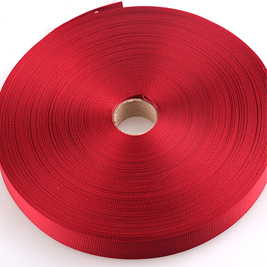
The moisture in the air may cause spots in the car. When this kind of webbing contacts the clothes of passengers, the spots and colors on the luggage webbing will also be transferred to the clothes. Therefore, it should have anti spot fading characteristics, which is also called spot color fastness. The spot color fastness test includes multi fiber test and filter paper test. The multi fiber test is to clamp a sample of tissue belt between two layers of colored cloth. Immerse the mixed colored cloth into the vessel with distilled water and completely wet it. Then squeeze the water out of the extruder, and then clamp these colored cloth wrapped with selvedge webbing into the plexiglass sheet, put it into the sample holder, and lock the sample holder. This rack is placed in a high and low temperature box at a certain temperature, and after reaching the specified time. Take out the sample and hang the colored cloth.
It is precisely because of this performance that silk fabrics are more suitable for direct contact with human skin. Therefore, we can directly wrap a unique garment with silk scarves in the hot summer, which is not only beautiful but also comfortable. Silk not only has good heat dissipation performance, but also has good warmth retention. Its thermal insulation is proud of its porous fiber structure. There are many tiny fibers in a silk fiber, and these tiny fibers are composed of even smaller fibers. Therefore, more than 38% of the seemingly solid silk is actually hollow, and there is a large amount of air in these gaps, which prevents the heat emission and makes the silk have good warmth retention.

special Silk double-layer belt wholesale Ink printing. At first glance, ink is not very different from glue, but when glue is printed on smooth fabrics, such as wind clothing, the color fastness is generally poor, and it can be scraped off with a nail, but ink can overcome this shortcoming. Therefore, when making windbreaker, it is usually printed with ink, with bright color and vivid image. Zhejiang special Silk double-layer belt There has been a wave of head prints in the market some time ago~I don't know if you have noticed it, then the clear and ultra realistic printing can only be printed with ink in general~Sometimes you can sprinkle gold powder and silver powder on the ink, and feel that the decoration effect is better.

The basic process flow of knitting is: bleaching and dyeing - weft rolling - weaving - off machine cutting - packaging. Since 1960, many technical innovations have been carried out on the knitting machine, mainly including the enlargement of peach plate diameter, the installation of an automatic stop device for breaking rubber bands, and the replacement of iron ingots with nylon ingots. The improvement of these equipment has increased the vehicle speed to 160~190 rpm, doubled the stand rate and greatly improved the product quality. In 1980, SD-81A and B rubber ingot belts were developed, which are soft, light, thin, firm, with small elongation, small impact force, short and flat joints. At the beginning of 1990, the trial production of car seat belts for Santana cars was successful. After more than two years of research and trial production, the product quality reached QC49-92 and TL-VW470 standards.