Hygiene: It is a natural fiber, and its main component is cellulose, with a small amount of waxy substances, nitrogen and pectin. After various inspections and practices, the pure cotton ribbon has no stimulation or negative effect when contacting with the skin. It is beneficial to the human body and has good sanitary performance after being worn for a long time. Heat resistance: the heat resistance is good. When the temperature is below 110 ℃, it will only cause water evaporation on the webbing and will not damage the fiber. Therefore, the use, washing, printing and dyeing of pure cotton webbing at room temperature have no impact on the webbing, which improves the washing and wear resistance of pure cotton edging webbing.

Width detection: the tolerance of webbing with width of 1 "and above shall not exceed ± 0.25 points; The tolerance of webbing with width of 25MM and above shall not exceed ± 0.5MM; The standard tolerance of webbing width of 1 "and less than 25MM shall not exceed ± 0.25MM; Note: The flat end and herringbone edging webbing must be of sufficient size, but not more than 0.25 points. Thickness inspection: the tolerance shall not exceed ± 0.1MM; Color difference test: there is no yin and yang color on the belt surface by naked eye, and the needle edge and cloth edge cannot be exchanged for the color and texture (the needle edge of each woven belt must be of one color). Singeing and labeling: Each bag ribbon must be singed thoroughly, but cannot be burnt. The quality inspector shall inspect the packaging label to be consistent with the actual goods (specification, color, quantity), and seal it for warehousing. If errors and omissions are found, the relevant processes shall be traced in time, and the relevant personnel shall be held accountable according to the seriousness of the case.
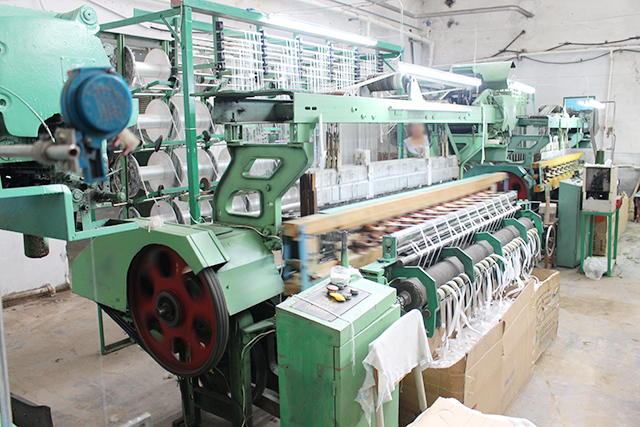
Xiamen special Brocade ribbon Guess the pros and cons. It is difficult to identify the front and back sides of some cases and bags because of their special texture. The following is how the luggage and webbing factory teaches you to identify the front and back of the webbing. In fact, we can identify it according to the pattern of the webbing, the front of the pattern is clear and clean, the pattern lines are obvious, the layers are clear, and the color is bright. commonly Xiamen special Brocade ribbon wholesale The patterns on the front are clearer and more beautiful than those on the back. The front pattern of plant and color matching patterned fabrics with striped appearance must be clear and pleasing. This pattern is especially obvious when weaving jacquard belts.

Indirect plate making method: the indirect film is first exposed, hardened with 1.2% H2O2, developed with warm water, and dried to make a strippable graphic negative. During plate making, the adhesive film surface of the graphic negative is closely attached to the stretched screen, the adhesive film is tightly attached to the wet screen by extrusion, the film base is removed, and the screen is dried by wind. Process flow: 1. Stretched wire mesh - degreasing - drying. 2 Indirect film - exposure - hardening - development - fitting - drying - revision - blocking. 3 Straight mixed plate making method: first, paste the photosensitive adhesive layer on the screen frame with water, alcohol or photosensitive adhesive, dry it with hot air, remove the substrate of the photosensitive film, and then print the plate. After developing, the screen plate is made.

The so-called water slurry is a kind of water-based slurry. It doesn't have a strong hand feel and coverage when printed on clothes. It is only suitable for printing on light colored fabrics. The price is relatively flat, and it belongs to a lower grade printing category. But it also has an advantage, because it will not affect the original texture of the fabric, so it is more suitable for large-scale printing patterns. It is characterized by soft handle and bright color~~But there is a big disadvantage of the slurry. The color of the slurry is lighter than the cloth color~~If the cloth color is darker, the slurry can not cover at all.
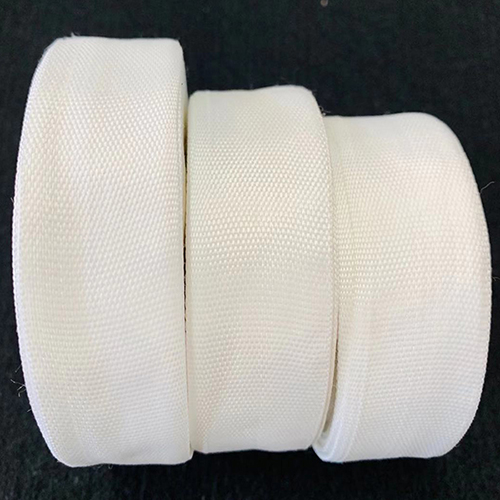
The basic process flow of knitting is: bleaching and dyeing - weft rolling - weaving - off machine cutting - packaging. Since 1960, many technical innovations have been carried out on the knitting machine, mainly including the enlargement of peach plate diameter, the installation of an automatic stop device for breaking rubber bands, and the replacement of iron ingots with nylon ingots. The improvement of these equipment has increased the vehicle speed to 160~190 rpm, doubled the stand rate and greatly improved the product quality. In 1980, SD-81A and B rubber ingot belts were developed, which are soft, light, thin, firm, with small elongation, small impact force, short and flat joints. At the beginning of 1990, the trial production of car seat belts for Santana cars was successful. After more than two years of research and trial production, the product quality reached QC49-92 and TL-VW470 standards.