Width detection: the tolerance of webbing with width of 1 "and above shall not exceed ± 0.25 points; The tolerance of webbing with width of 25MM and above shall not exceed ± 0.5MM; The standard tolerance of webbing width of 1 "and less than 25MM shall not exceed ± 0.25MM; Note: The flat end and herringbone edging webbing must be of sufficient size, but not more than 0.25 points. Thickness inspection: the tolerance shall not exceed ± 0.1MM; Color difference test: there is no yin and yang color on the belt surface by naked eye, and the needle edge and cloth edge cannot be exchanged for the color and texture (the needle edge of each woven belt must be of one color). Singeing and labeling: Each bag ribbon must be singed thoroughly, but cannot be burnt. The quality inspector shall inspect the packaging label to be consistent with the actual goods (specification, color, quantity), and seal it for warehousing. If errors and omissions are found, the relevant processes shall be traced in time, and the relevant personnel shall be held accountable according to the seriousness of the case.

Not only the production process is complex, but also the packaging process is very complicated. Only the webbing that has passed the inspection can be packaged out of the warehouse, otherwise it will be treated as defective products. The specific packaging process is as follows: 1. The process control method: 1. The surface of each winding tape must be smooth and flat (except for special webbing); Those who cannot be involved in substandard products shall be held accountable according to the seriousness of the case. Knot: ≤ 3/100Y, ≤ 2/50Y; Short code: ± 0.5/100Y; Each knapsack strap must have the label of the tape coiler. Inspection according to the customer's requirements: for example, 336, 217, 115, 314, 108, 114, 384, 206, 419, 122 adhesive paper and rubber hose, no pins can be used;
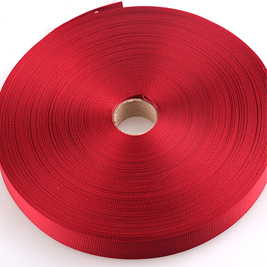
For many printing, attention should be paid to printing when mass producing silk screen products, ribbon printing and ribbon printing. Screen printing is the basis of screen printing, and selecting appropriate screen is an indispensable link. As printing processing and screen printing have a very wide range of applications, there are many factors related to them. When selecting screen, different printing screens should be selected according to the specific situation and printing requirements. Generally, the following different perspectives can be considered when selecting screen. Screen shall be selected according to the type of substrate with binding ribbon printing and printing price. When selecting, it shall be selected and used according to fiber fabric, paper products, glass, ceramics, metal, plastic, wood products, electronic products, etc.
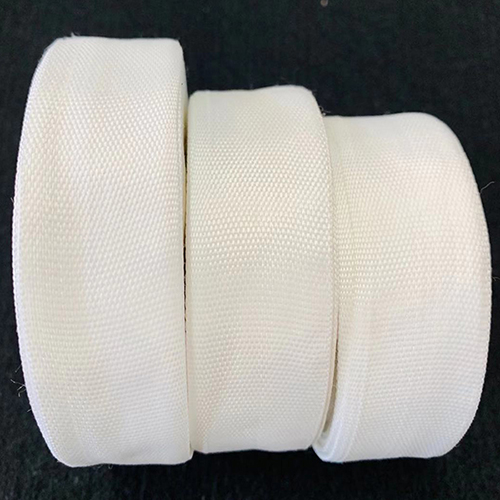
But because Fujian Customized 3-strand twisted rope Manufacturer It has a certain hardness, so it is not suitable for large area of field patterns. Large area patterns should be printed with water slurry, and then dotted with glue slurry, which can not only solve the problem of large area of hard glue, but also highlight the sense of hierarchy of patterns; Another method is to steal a large area of field patterns and make them look bad, but they are always hard to wear. Therefore, it is better to combine water and glue to solve the problem of large area printing. Customized 3-strand twisted rope It has smooth surface and matte surface. It has soft, thin, environmental protection and other characteristics, and can be stretched. Generally speaking, glue printing is more commonly used. For leisure brands such as "Yichun", they basically use glue ¡¡¡¡¡¡¡¡¡¡¡¡¡¡¡¡¡¡¡¡¡¡¡¡¡¡¡¡¡¡¡¡¡¡¡¡¡¡¡¡¡¡¡¡¡¡¡¡¡¡¡¡¡¡¡¡¡¡¡¡¡¡¡¡¡¡¡¡¡¡¡¡¡¡¡¡¡¡¡¡¡¡¡¡¡¡¡¡.

The basic process flow of knitting is: bleaching and dyeing - weft rolling - weaving - off machine cutting - packaging. Since 1960, many technical innovations have been carried out on the knitting machine, mainly including the enlargement of peach plate diameter, the installation of an automatic stop device for breaking rubber bands, and the replacement of iron ingots with nylon ingots. The improvement of these equipment has increased the vehicle speed to 160~190 rpm, doubled the stand rate and greatly improved the product quality. In 1980, SD-81A and B rubber ingot belts were developed, which are soft, light, thin, firm, with small elongation, small impact force, short and flat joints. At the beginning of 1990, the trial production of car seat belts for Santana cars was successful. After more than two years of research and trial production, the product quality reached QC49-92 and TL-VW470 standards.
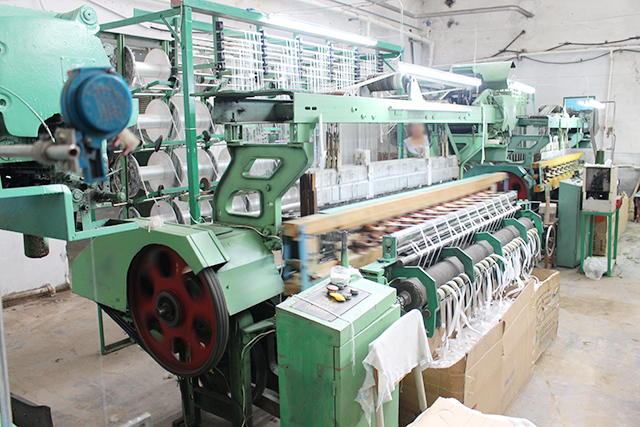
The progress of process technology has brought about the upgrading of edging webbing products. In 1979, the trial production of the domestic generation SD9-9 rubber ingot belt was successful, which ended the history of rubber ingot belt products relying on imports. After the weft tube is formed by the yarn warp cylinder and weft winding, it is inserted on the fixed gear seat of the knitting machine, and the weft tube rotates along the 8-shaped track to draw the yarns to cross weave with each other. Usually, the number of spindles is even, the woven tape is tubular, the number of spindles is odd, and the woven tape is flat. Spindle weaving technology has been applied since old China. The number of spindles varies from 9 to 100 due to different equipment.